Home › Specialities › Vision correction › Eyewear guide › Eyewear brands explained
Who makes eyewear brands, and what does a brand name tell you?
Most famous eyewear labels are made by a handful of large companies, such as EssilorLuxottica, Kering Eyewear, Safilo, Marcolin and Thélios. Some brands they own; fashion houses license their names to them for a fixed number of years. A brand tells you about design and finish. The lenses made to your prescription decide how well you see.
Spectacle frames and sunglasses carry many famous names: Italian heritage houses, sports labels, luxury fashion houses and Indian labels. This guide explains who actually designs and makes them, what a brand name does and does not tell you, and how to decide whether a branded frame makes sense for you. It describes brands only to explain them; it does not recommend any of them.
Who makes designer glasses?
Most famous eyewear names are not made by the company whose name is on the arm. A handful of large eyewear groups design, make and distribute nearly all of them, either as brands they own or under licence.
- EssilorLuxottica (France and Italy) was formed in 2018, when the Italian frame maker Luxottica and the French lens maker Essilor came together. It owns Ray-Ban, Oakley, Persol, Oliver Peoples and Vogue Eyewear, and makes eyewear for Prada, Chanel, Burberry, Versace, Dolce & Gabbana and other fashion houses under licence.
- Kering Eyewear (Padua, Italy) belongs to the Kering fashion group. It makes eyewear for Kering's own houses, such as Gucci and Saint Laurent, and for names such as Cartier. It has owned the Danish maker Lindberg since 2021 and Maui Jim since 2022.
- Safilo (Padua, Italy) owns Carrera, Polaroid and Smith, and makes BOSS, HUGO, Tommy Hilfiger and other names under licence.
- Marcolin (Longarone, Italy) makes Tom Ford eyewear on a permanent licence (since 2023), among others.
- Thélios is the eyewear company of the LVMH luxury group and makes Dior and Fendi eyewear, among others.
Licences change hands (Valentino eyewear moved to Kering Eyewear in January 2026), so a label's glasses may later be made by a different company, with different sizes, fit and finish.
Owned, licensed and house brands
Owned eyewear brands
Here the eyewear company owns the name, and the brand exists mainly for eyewear. Ray-Ban, Oakley, Persol, Lindberg, Carrera and Polaroid are examples.
- Advantages: the design team works only on eyewear, and long-running shapes and sizes tend to stay the same from year to year.
- Disadvantages: well-known owned brands are widely copied, so checking that a piece is genuine matters more.
- Good for: people who want a long-running shape they can find again.
- Think twice if: you want this season's fashion look.
Licensed fashion brands
A fashion house known for clothes, bags or perfume lets an eyewear company design, make and distribute glasses under its name for a fixed number of years, in return for a fee. Prada's licence with EssilorLuxottica, for example, runs to 2030, and Burberry's to 2035. Their advantages and drawbacks are set out under fashion-house labels below.
House brands
Some labels belong to a retailer or a wholesaler rather than to a frame maker or a fashion house, so there is no single maker's history to tell.
- Advantages: one label can cover many basic shapes and sizes.
- Disadvantages: less is usually published about who made the frame and from what, and quality differs from model to model.
- Good for: people who judge a frame by its material, hinges and fit rather than by its name.
- Think twice if: the frame carries no material stamp or size numbers.
Some well-known names, briefly
These notes are for understanding, not a ranking.
Ray-Ban
Started by the American optical company Bausch & Lomb, which put anti-glare sunglasses for pilots on sale in 1937; owned by Luxottica since 1999. Known for the Aviator, Wayfarer and Clubmaster shapes. Our page on Ray-Ban model codes explained covers its families and codes.
Persol
Founded in Turin, Italy, in 1917 by the optician and photographer Giuseppe Ratti; the name comes from the Italian per il sole, "for the sun". Known for acetate frames with a silver arrow on the hinge and for folding models. Owned by Luxottica since 1995.
- Advantages: classic acetate shapes; acetate can be warmed and adjusted to fit the face.
- Disadvantages: acetate is heavier than titanium or flexible nylon.
- Good for: people who like classic acetate shapes and an adjustable fit.
- Think twice if: you want the lightest possible frame for long hours.
Oakley

Founded by Jim Jannard in California in 1975; owned by Luxottica since 2007. Known for sports sunglasses that wrap around the face and for lens tints made for sport.
- Advantages: a wrapped front blocks light, wind and dust from the sides.
- Disadvantages: a strongly curved front adds unwanted power and prism to a prescription lens, so it needs a special lens design, and some powers cannot be fitted well.
- Good for: sport and outdoor work, with no power or a low power.
- Think twice if: you have a high power and want wrap sunglasses.
Lindberg and Silhouette
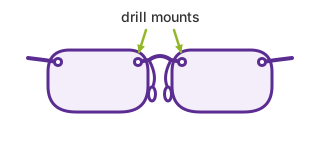
Lindberg grew out of an optician's practice in Aarhus, Denmark; its screwless Air Titanium rimless frame dates from the mid-1980s. Its frames are made to order, and Kering Eyewear has owned it since 2021. Silhouette was founded in Linz, Austria, in 1964 by Anneliese and Arnold Schmied and is known for very light rimless frames.
- Advantages: very light on the nose; pure titanium contains no nickel, so a frame that is titanium in every part suits many people with metal allergy.
- Disadvantages: rimless lenses are drilled, so they need a tough, drill-friendly lens material, such as Trivex, polycarbonate or a suitable high-index plastic (glass cannot be used), and gentle handling.
- Good for: low to moderate powers, careful wearers, and metal allergy (pure titanium).
- Think twice if: you have a high minus power; with no rim, the thick lens edges show and the lenses feel heavy.
Carrera and Polaroid
Both are owned by Safilo. Carrera was founded in Austria in 1956 by Wilhelm Anger and later took its name from the Carrera Panamericana road race; it is known for sporty aviators and one-piece shield sunglasses. Polaroid takes its name from the polarising filter sheet developed by the American inventor Edwin Land, whose company Polaroid was set up in 1937; its sunglasses are known for polarised lenses.
- Advantages: polarised lenses cut glare from water and wet roads, which helps near Goa's beaches and in the monsoon.
- Disadvantages: phone screens and car dashboards can look dark through polarised lenses, and a one-piece shield lens cannot take a normal prescription.
- Good for: driving, beach and water sport, with no power or a low power.
- Think twice if: you need a strong power in a one-piece shield, or you read phone or dashboard screens outdoors a lot.
Fashion-house labels
Prada, Gucci, Burberry, Versace, Chanel, Dior and Tom Ford are fashion names whose eyewear is made by the groups above. These houses made their names in clothing, leather goods or perfume, not eyewear (Burberry began in England in 1856, Prada in Milan in 1913, Gucci in Florence in 1921, Dior in Paris in 1946, Versace in Milan in 1978, and Tom Ford launched his own label in the mid-2000s); their spectacles and sunglasses are made under licence or by the group's own eyewear company. Each carries signature details, such as Gucci's GG logo or Burberry's check pattern.
- Advantages: the house's look (its logos, patterns and colours), usually with a careful finish, made by a large eyewear company.
- Disadvantages: logo-led designs date with fashion, and part of what you pay goes to the licence and brand marketing. Some shapes are made for looks first: very large, flat or strongly curved fronts that do not suit every prescription.
- Good for: people who like a recognisable fashion look and will wear the frame often.
- Think twice if: you mainly want the logo, or you have a high power or need progressive lenses and the shape is very large, very narrow or strongly curved.
Indian eyewear labels
India also has its own fashion eyewear labels, made by Indian eyewear companies. Their histories are shorter and less documented than those of the big international names.
- Advantages: designs from makers based in India.
- Disadvantages: as with any label, materials and finish differ between models.
- Good for: people who want a fashion frame from a known maker.
- Think twice if: you are choosing for the label alone; check the material stamp, hinges and fit.
A branded frame: advantages and disadvantages
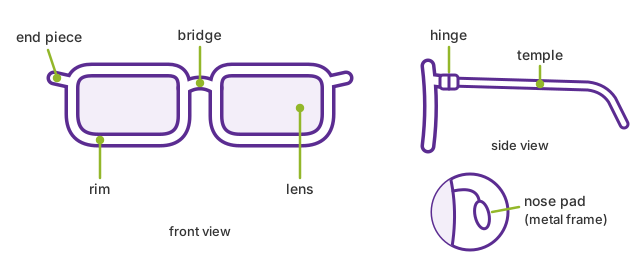
- Advantages: consistent sizing (the numbers inside the arm help you find a similar fit again); usually a careful finish on hinges, screws and nose pads; papers, a warranty and spare parts through the brand's distributor; and traceable model and colour codes. See how to check if branded glasses are original, and frame materials for what frames are made of.
- Disadvantages: part of the price goes to the licence, advertising and the label rather than the materials. The logo says nothing about the lenses, whose power, centring, material and coatings decide how well you see. Famous names are also widely copied, sometimes as sunglasses with no real UV protection.
- Good for: people who wear spectacles all day and want a frame that keeps its shape and finish for years, or who enjoy a particular design or heritage.
- Think twice if: the frame is for a young child, who will break or outgrow it; your prescription is still settling, as in the weeks after cataract surgery; you have a very high power, where a small, well-centred frame matters more than the name; or you are choosing only for the logo.
Before you choose a frame
A licence decides who makes the frame, not how your lenses are made and centred. Those steps begin with an eye test for glasses; then the frame, branded or not, is chosen around your prescription, your pupil distance and fitting height, and the way you use your eyes. Fit and lenses matter more than the label. Our page on dispensing versus selling spectacles explains these steps, and the eyewear guide covers shapes, materials and trends.
If you need spectacles, the Vision Correction Centre at ReNew Vision Eye Hospital, Vasco, provides vision correction: an eye test, lenses made to your prescription, and help choosing a frame that suits your lenses and your face.
Questions patients ask
Does a fashion house make its own glasses?
Usually not. Most fashion houses license their name to a large eyewear company, which designs, makes and distributes the glasses for a fixed number of years. A few eyewear names, such as Ray-Ban or Oakley, are owned outright by the eyewear company.
Do branded frames give clearer vision?
No. Clear vision comes from the lenses: the right power, made in a suitable material and centred correctly in front of your eyes. A branded frame can add finish and durability, but the name on the arm does not change what you see.
Is a frame made under licence genuine?
Yes. A licensed frame is made, with the fashion house's permission, by the eyewear company that holds the licence, so it is the brand's genuine product. A copy is made without that permission. How well you see still depends on the lenses and the fit.
Why can a brand change in style or fit over the years?
Fashion houses sign eyewear licences for a fixed number of years, and licences move between companies. When a different maker takes over, the designs, sizes and finish can change, even though the label stays the same.
What is a house brand in eyewear?
It is a label owned by a retailer or a wholesaler rather than by a frame maker or a fashion house. Quality varies, as with any brand, so look at the material, hinges, finish and fit of the frame itself.
Brand and model names on this page are trademarks of their owners and are used only to explain eyewear. ReNew Vision Eye Hospital is not connected with these brands.
This page is general eye-health information, not personal medical advice. Your eye doctor advises you after examining your eyes.