Home › Specialities › Vision correction › Eyewear guide › Frames for your face shape
Which spectacle frames suit my face shape?
Find your face shape by tracing its outline on a mirror or a photo. As a rough guide, angular frames balance a round face, rounded frames soften a square one, and most shapes suit an oval face. Treat this as a starting point: the frame must first fit your nose and face width and suit your lens power.
Ask a friend which frame suits you and the answer usually starts with your face shape. Face shape is a useful starting point, but it is only one of the things that decide whether a frame works for you. This guide shows how to find your face shape, which frames usually flatter each shape and why, and where fit and your lens power have to come first.
How do I find my face shape?
- Tie your hair back and stand in good daylight, close to a mirror, or ask someone to take a photo of your face straight on, at eye level.
- Trace the outline of your face on the mirror with a bar of soap or a washable marker, or on the photo with your finger.
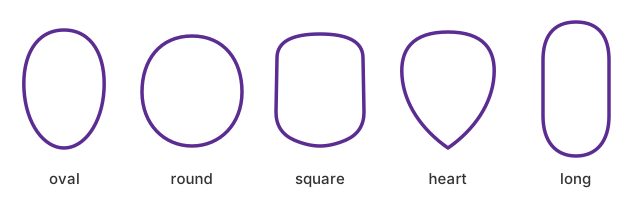
- Compare three widths: forehead, cheekbones and jaw. Which is widest?
- Compare length with width. Is your face about as long as it is wide, or clearly longer?
- Look at the jaw line: soft and rounded, square and angular, or narrowing to a pointed chin?
Many faces fall between two shapes, and that is normal. Go by the feature that stands out most, such as a strong jaw, full cheeks or a broad forehead.
The contrast rule, and its limits
The traditional advice is contrast: angular frames balance soft, round features, and curved frames soften strong, angular ones. Two other rules of thumb help. The frame should be about as wide as your face at the temples, and its upper edge should roughly follow the line of your eyebrows. These are guides, not laws. Your colouring, hairstyle, the size of your features and simply what you like all count, and plenty of people look good in a shape the chart says to avoid. For the names and history of each shape, see frame shapes explained.
Frames for each face shape
Round face
Width and length are similar, with full cheeks and a soft, rounded jaw.
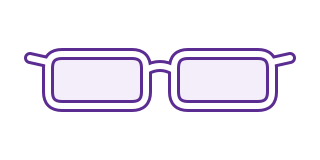
- Usually flatters: rectangles, squares, trapezoid frames (the shape Ray-Ban made famous as the Wayfarer), geometric hexagons and navigators. Straight lines and corners add definition, and a frame a little wider than the cheeks makes the face look slightly narrower.
- Think twice about: small, perfectly round frames, which repeat the roundness, and narrow frames that make the cheeks look fuller.
- Lens note: many slim rectangles are shallow. If you need progressive lenses, choose a deeper rectangle or soft square.
Oval face
A little longer than wide, with the cheekbones as the widest part and a gently rounded forehead and jaw.
- Usually flatters: almost every shape, because the proportions are already balanced: aviators, rectangles, browlines, soft squares and ovals all work. Choose a frame about as wide as the widest part of the face.
- Think twice about: very large frames that hide the face's natural balance, and very narrow ones that look too small.
- Lens note: with so many shapes to choose from, let your power decide the size.
Square face
A broad forehead and a strong, angular jaw, with width and length roughly equal.
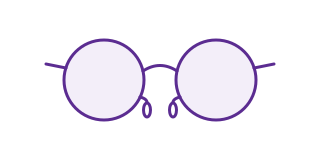
- Usually flatters: round, oval and panto frames (round with a flatter upper edge), aviators, and thin metal or rimless styles. Curves soften the jaw line, and a frame that sits a little higher on the face draws attention up to the eyes.
- Think twice about: sharp, boxy frames and heavy geometric shapes that repeat the angles of the jaw.
- Lens note: a small round or panto, sized so that your pupils sit near the centre of each lens, keeps high plus lenses thinner.
Heart face
A wider forehead and cheekbones, narrowing to a slim or pointed chin.
- Usually flatters: light, rounded frames, ovals, soft cat-eyes, aviators (whose deep lenses sit low on the face and add visual weight to its lower half, balancing a narrow chin), and rimless or light-coloured frames.
- Think twice about: heavy, wide or decorated frames that add more width at the forehead.
- Lens note: light frames pair well with light lens materials, so the spectacles do not feel heavy on a delicate face.
Long (oblong) face
Clearly longer than it is wide, often with a high forehead and a long, straight cheek line.
- Usually flatters: deep frames with plenty of height, squares, bold or decorated arms that add width at the sides, and a darker or lower bridge that visually shortens the nose.
- Think twice about: small, shallow, narrow frames, which make the face look even longer.
- Lens note: deep frames suit progressive and bifocal lenses well.
Diamond and triangle faces
A diamond face has a narrow forehead and jaw with wide cheekbones; cat-eyes and browlines add width at the brow, and ovals or rimless frames soften the cheekbones. A triangle face has a narrow forehead and a wider jaw; frames with a strong upper edge, browlines and cat-eyes balance it, while bottom-heavy shapes are worth thinking twice about.
Why fit and lens needs come first
Before a frame can suit your face, it has to suit your eyes. During dispensing, these checks decide which versions of a shape are possible for you:
- Eye position: your pupils should sit close to the centre of each lens opening. A frame that is too wide puts them near the inner edge, which makes lenses thicker and can feel odd.
- Bridge: many Indian faces have a low, flat nose bridge. Plastic frames with a moulded bridge may slide down or rest on the cheeks; adjustable nose pads, or low-bridge-fit designs with taller nose rests, help.
- Arm length: the arms should reach well behind the ears so the frame stays put.
- High minus power: very large frames give thick, heavy edges; a smaller full-rim frame usually looks and feels better. See stylish frames for high power.
- High plus power: small, well-centred frames keep the lenses thinner and lighter.
- Progressive or bifocal lenses: very narrow, shallow frames can cut off the reading zone. See frames for progressive lenses.
- Children: fit and safety come before fashion; our guide to spectacles for children explains why.
So your power may rule out a very large or very narrow version of a shape, but it rarely rules out the shape itself, because most shapes are made in several sizes. The general points about frame fit are on our spectacle frames page.
Trying frames on
- Try at least three frames from different shape families: one angular, one round or oval, and one in between.
- Take phone photos straight on and from the side. Without your spectacles the mirror may look blurred, and most people judge better from a photo.
- Smile: the frame should not lift off your nose or press on your cheeks.
- Look down at your feet and shake your head gently: the frame should not slip.
- Judge in daylight, with the hairstyle, beard, moustache or bindi you usually wear.
A face-shape chart can narrow the choice, but it cannot measure you. The steps that matter come one after another: an eye test, then a frame chosen around your prescription, your pupil distance and fitting height, and the way you use your eyes at work and at home. A frame that fits, with lenses made and checked for you, will serve you better than any rule from a chart.
If you need spectacles, the Vision Correction Centre at ReNew Vision Eye Hospital, Vasco, provides vision correction: an eye test, lenses made to your prescription, and help choosing a frame that suits your lenses and your face.
Questions patients ask
Can I find my face shape from a selfie?
Yes, but hold the phone at arm's length or ask someone else to take the photo. A front camera held close to the face makes the nose and forehead look larger and can mislead you. Take the photo straight on, at eye level, with your hair tied back.
What if my face is a mix of two shapes?
Most faces are. Go by the feature that stands out most, such as a strong jaw or full cheeks, and try frames suggested for both shapes. Photos of you in two or three frames usually make the choice clear.
Do face-shape rules apply to sunglasses too?
Mostly, yes, but sunglasses are often chosen larger, for shade and coverage. The fit points still apply, and whatever the shape, the lenses should block UV up to 400 nm (UV400).
Which frames suit a round face if I have a high minus power?
A moderately sized rectangle or soft square in full-rim plastic usually works well. The straight lines suit a round face and the thick rim hides the lens edge. Avoid very large or rimless styles, which make strong minus lenses look thick and feel heavy.
Does my hairstyle or beard change which frame suits me?
It can. A full beard or heavy fringe adds weight to the face, so a lighter or thinner frame often balances it, while short hair and a clean-shaven face can carry a bolder frame. Try frames with your usual hairstyle, beard or bindi.
Brand and model names on this page are trademarks of their owners and are used only to explain eyewear. ReNew Vision Eye Hospital is not connected with these brands.
This page is general eye-health information, not personal medical advice. Your eye doctor advises you after examining your eyes.