Home › Specialities › Vision correction › Eyewear guide › Frame shapes explained
What are the different types of spectacle frame shapes?
Spectacle frames come in about fifteen common shapes: aviator, navigator, round, panto, oval, cat-eye, browline, rectangle, square, square-top, geometric, oversized and wrap, plus rimless and half-rim styles. Each has advantages and drawbacks, and your power matters: big or strongly curved frames make strong lenses thicker, and slim frames can be too shallow for progressives.
Frames are described mostly by their outline. Each of the fifteen below has its history where well recorded, its advantages and disadvantages, who it suits and what it means for your lenses. This page is part of our eyewear guide.
Face-shape advice is only a starting point (see frames for your face shape). Minus lenses (short sight) are thickest at the edges and plus lenses (long sight, reading) in the centre, so a frame's size, depth and curve also change your lenses.
Pilot shapes
Aviator
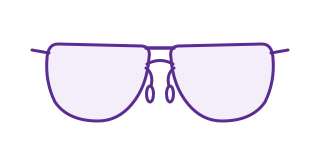
Teardrop lenses that dip low towards the cheeks, thin metal and a double bridge (a second bar across the top). Bausch & Lomb developed it in the 1930s as anti-glare sunglasses for American military pilots; it went on sale in 1937 as the first Ray-Ban Aviator. Ray-Ban says the lenses dip low so that pilots could glance down at their instruments.
- Advantages: light; adjustable nose pads fit most noses; a wide view and good sun cover.
- Disadvantages: large lenses that can look busy on a small face; thin metal bends if sat on.
- Good for: oval, square and heart-shaped faces.
- Think twice if: your face is small or narrow, or your power is high.
- Lenses: high minus lenses get thick at the edges of a big teardrop; the depth usually suits progressives.
Navigator
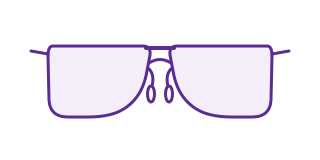
An aviator with squarer, flatter-bottomed lenses and the same double bridge. Squared-off aviators such as the Ray-Ban Caravan date from the 1950s.
- Advantages: more lens area low down than a teardrop, so more room for reading.
- Disadvantages: large and angular; it can overpower a small face.
- Good for: round and oval faces.
- Think twice if: your face is narrow or your minus power is high.
- Lenses: the squarer lower corners suit progressive lenses when the frame is deep enough.
Round and soft shapes
Round
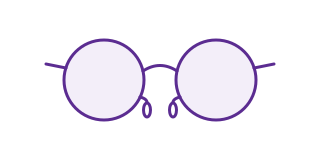
Circular lenses, usually on thin metal wire. Wire rounds were everyday wear in the 1920s and 1930s. Ray-Ban dates its Round Metal to 1989.
- Advantages: light, simple and vintage; a small round keeps plus lenses thin.
- Disadvantages: it can look small on a wide face.
- Good for: square and angular faces; high plus powers in a small size.
- Think twice if: your face is round or wide.
- Lenses: a round lens centred on your pupil has even edge thickness; progressives need a larger round.
Panto
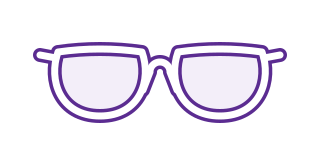
Round at the bottom with a flatter top, often with a keyhole bridge (an arch resting on the sides of the nose). The trade also calls it P3. No single designer is credited with it.
- Advantages: softer than a full circle and easy to wear.
- Disadvantages: a moulded plastic bridge adjusts very little and may slide on a low, flat nose.
- Good for: most face shapes.
- Think twice if: your nose bridge is low; choose a version with nose pads or a low-bridge fit.
- Lenses: medium and larger sizes usually have enough depth for progressive lenses.
Oval
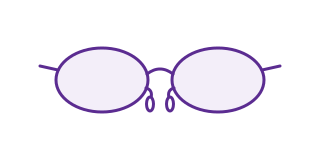
A gentle, slightly wide ellipse with no corners: the quiet, conservative choice. No single designer is credited with it.
- Advantages: soft, unfussy and light; suits all ages.
- Disadvantages: it can look plain, and slim ovals are shallow.
- Good for: square and angular faces; office wear.
- Think twice if: you need progressive lenses and the oval is narrow.
- Lenses: check the depth below the pupil for progressive lenses.
Statement shapes
Cat-eye
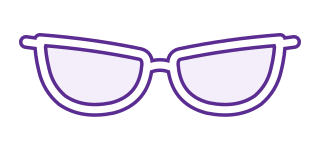
The outer top corners sweep upwards. The shape is usually credited to the American designer Altina Schinasi, whose Harlequin frame of the late 1930s introduced the look. It became a symbol of 1950s glamour.
- Advantages: lifts the face and draws attention to the eyes; it can be subtle or bold.
- Disadvantages: a strong fashion look, and the flared corners widen the lens.
- Good for: round and heart-shaped faces.
- Think twice if: you have a high minus power, because thick edges show at the flared corners.
- Lenses: for progressives, pick a softer cat-eye with enough depth.
Browline
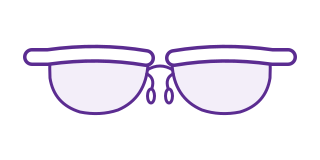
A heavy plastic brow along the top with a thin metal rim below. Shuron's Ronsir frame of 1947 popularised the browline, and Ray-Ban's Clubmaster of 1986 later revived it.
- Advantages: the brow frames the face and hides the upper lens edge; the metal lower rim keeps it light.
- Disadvantages: two materials to adjust; the thin lower rim shows thick minus edges.
- Good for: oval, round and heart-shaped faces; a smart, studious look.
- Think twice if: your face is small or your minus power is high.
- Lenses: most take progressive lenses if the lower part is deep enough.
Oversized

Large lenses, sometimes flaring at the outer edges in a butterfly shape. Very large frames were a strong look of the 1970s and 1980s; no single designer is credited.
- Advantages: a bold look; in sunglasses, more cover from sun, wind and dust.
- Disadvantages: heavier lenses that slide down the nose; the outer parts are less sharp.
- Good for: sunglasses with little or no power; wider faces.
- Think twice if: your power is moderate or high, your face is small or your nose bridge is low.
- Lenses: with any strong power a big lens is thicker and heavier.
Geometric

Lenses with straight sides and corners, such as hexagons and octagons, usually in thin metal. No single designer is credited.
- Advantages: modern and light; adds angles to a soft face.
- Disadvantages: it can date quickly, and thin rims bend with rough handling.
- Good for: oval and round faces.
- Think twice if: your face is already angular or your lenses will be thick.
- Lenses: the corners show high minus edge thickness; check the depth for progressives.
Everyday angular shapes
Rectangle
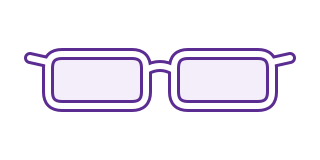
Wider than tall, with straight lines: the everyday office frame, in acetate, light plastic or thin metal. No single designer is credited.
- Advantages: practical, with a wide view for distance.
- Disadvantages: slim versions are shallow, and it can look severe on an angular face.
- Good for: round faces; office and daily wear.
- Think twice if: your face is long and narrow, or you need progressives in a slim rectangle.
- Lenses: for progressives, look for about 30 mm of depth.
Square
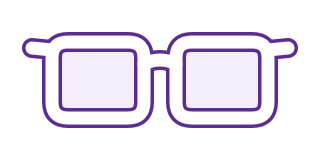
Almost as tall as it is wide, often in thick acetate. No single designer is credited.
- Advantages: deep lenses leave room for reading zones, and thick rims hide minus edges.
- Disadvantages: heavy in thick acetate, and it can overpower a small face.
- Good for: round and long faces; progressive wearers.
- Think twice if: you have a square jaw or a small face.
- Lenses: the depth suits progressives; keep the size moderate for strong powers.
Square-top (trapezoid)
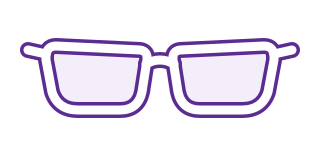
Wider at the top than the bottom, usually in thick plastic. A well-known example is the Ray-Ban Wayfarer, designed in 1952 by Raymond Stegeman at Bausch & Lomb; many makers have since made the shape. Wayfarer is Ray-Ban's trademark; the general name is trapezoid or square-top.
- Advantages: suits most faces; sturdy; the thick rim hides lens edges.
- Disadvantages: fairly heavy, and a moulded bridge can slide on a low nose bridge.
- Good for: round and oval faces; men and women.
- Think twice if: your nose bridge is low and flat; low-bridge-fit versions have taller nose rests.
- Lenses: the narrower lower half leaves less room near the nose for a progressive reading zone.
Rim styles
These describe how the lens is held, not its outline; most shapes above can be made either way.
Rimless
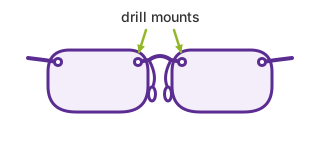
No rim: the bridge and arms are screwed or clipped into holes drilled through the lens. The Austrian maker Silhouette and the Danish maker Lindberg are known for very light rimless titanium designs.
- Advantages: the lightest style; almost invisible; nothing at the edge of your view.
- Disadvantages: fragile: drilled holes can crack, screws loosen, and repairs are harder.
- Good for: low and moderate powers; careful wearers.
- Think twice if: your minus power is high, you play sport, or the spectacles are for a child.
- Lenses: they need a tough, drill-friendly lens material, such as Trivex, polycarbonate or a suitable high-index plastic; glass cannot be used. High minus edges show all round.
Half-rim
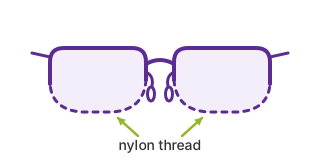
A rim along the top only; a thin nylon cord in a groove around the lower lens edge holds the lens. The trade calls it Supra or nylor; its inventor is not well documented.
- Advantages: a lighter look than a full rim and a neat office style.
- Disadvantages: the cord can loosen or break, and the exposed lower edge can chip.
- Good for: office wear, reading spectacles, and low to moderate powers.
- Think twice if: your minus power is high or you are rough with spectacles.
- Lenses: a very thin lens may need extra edge thickness for the groove.
Sport shape
Wrap
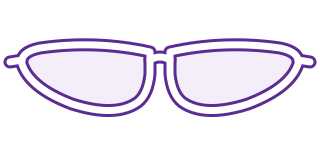
A strongly curved front that wraps around the face. Oakley is one brand known for sport wraps; single-lens shields, a related style, cannot take a normal prescription.
- Advantages: blocks side glare, wind and dust, and stays put during sport.
- Disadvantages: the curve adds unwanted power and prism to prescription lenses.
- Good for: cycling, cricket, fishing and the beach, and after cataract surgery if your eye doctor advises UV400 wrap sunglasses.
- Think twice if: you need a moderate or high power or astigmatism in them.
- Lenses: special designs correct for the curve, but not every power can be fitted.
Shape is only half the choice
The eye test comes first; then a frame is chosen around your prescription, measurements and use; then the lenses are made, checked and fitted. Fit and lenses matter more than the label. See dispensing vs selling spectacles, and the guides to stylish frames for high power and frames for progressive lenses.
If you need spectacles, the Vision Correction Centre at ReNew Vision Eye Hospital, Vasco, provides vision correction: an eye test, lenses made to your prescription, and help choosing a frame that suits your lenses and your face.
Questions patients ask
Which frame shape is easiest to get used to?
Moderate rectangles, ovals and panto shapes in a size close to your face are usually the easiest, because the lenses are evenly sized and the frame stays out of your line of sight. Very large, very small or strongly curved frames can take longer, especially with strong powers or progressive lenses.
Can aviator frames be used as everyday spectacles?
Yes. Many aviator-style frames are made as spectacle frames, with adjustable nose pads. Choose a size that keeps your eyes near the centre of each lens. With a high minus power the large teardrop lens gets thick and heavy at the edges, so a smaller aviator or a navigator may suit better.
Which frame shapes work with progressive lenses?
Shapes with enough depth below the pupil, usually a frame about 30 mm deep or more; our page on frames for progressive lenses goes through each style.
Are rimless frames suitable for children?
Usually not. Rimless frames are held by small screws or clips in drilled lenses, which can crack or loosen with rough handling. Children generally do better in full-rim frames made of flexible materials, with impact-resistant lenses and spring hinges.
Why can some wraparound sunglasses not be made in my power?
A strongly curved front tilts the lens in front of your eye, which adds unwanted power and prism. Special lens designs can correct this for many prescriptions, but not for every power or degree of astigmatism. Your eye doctor or optometrist can tell you after the eye test.
Is a Wayfarer the same as a square-top frame?
Wayfarer is the trademarked model name of one brand, Ray-Ban, first designed in 1952. Square-top or trapezoid is the general name for the shape, which many makers use. What matters for your eyes is the size, depth and fit of the frame, not the name.
Brand and model names on this page are trademarks of their owners and are used only to explain eyewear. ReNew Vision Eye Hospital is not connected with these brands.
This page is general eye-health information, not personal medical advice. Your eye doctor advises you after examining your eyes.