Home › Specialities › Vision correction › Eyewear guide › Frames for men
Which spectacle frame styles suit men?
Choose by fit and lenses first, style second. Navigators, browlines, thin metal, rectangles, square-tops, chunky acetate and rimless frames each suit some men and not others. Face width, nose bridge, your power, progressive lenses and your work, from office desks to the port and outdoor jobs, decide which style will feel and see right.
A frame decides how thick your lenses look, whether a progressive lens has room for its reading zone, and whether the spectacles stay put on a hot day at the port or under a helmet. This guide explains the main styles men wear, where each came from, and who each one suits. For all the shape families side by side, see frame shapes explained, and for what trade magazines reported for 2026, eyewear trends 2026.
Start with size: the three numbers
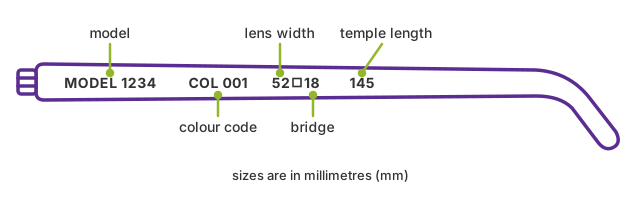
Inside one arm of most frames are three numbers, for example 54-18-145: lens width, bridge width and arm (temple) length, in millimetres. Most adult lenses are 50 to 54 mm wide and most bridges 16 to 20 mm. Broad faces often need an arm of around 145 to 150 mm. Reach the width through the bridge and end pieces rather than very large lenses, so that each pupil stays near the centre of its lens and strong lenses stay thinner.
The main styles, one by one
Navigator (square aviator)
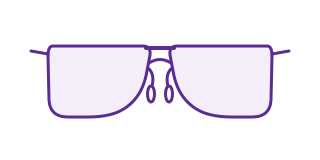
A navigator keeps the aviator's thin metal, double bridge and adjustable nose pads, but its lenses are squarer and deeper. The aviator began as a pilot's sunglass in the 1930s, and squared-off versions followed in the 1950s. Vision Monday and VisionPlus reported navigators returning in 2026 in place of shallow men's rectangles.
- Advantages: deep lenses leave room for progressive and bifocal zones; adjustable pads let the fitter set the frame height and help on a low nose bridge; light when made in metal.
- Disadvantages: the large lens area makes strong lenses thicker and heavier; the double bridge can look busy on a small face.
- Good for: round, oval and broad faces, progressive wearers, and a 1970s look.
- Think twice if: you have a high minus power, a narrow face, or you want a very low-key office look.
- For your lenses: choose the smallest size that fits your face width, so that your pupils sit near the lens centres.
Browline
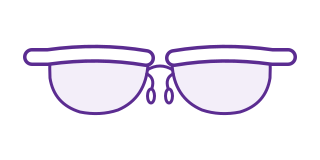
A browline frame has a heavy plastic upper bar, like an eyebrow, over thin metal rims below. Shuron's Ronsir frame of 1947 popularised the browline, the academic look of the 1950s, and Ray-Ban's Clubmaster of 1986 later revived it.
- Advantages: the strong upper line frames the eyes and gives a neat, serious look; the lower half stays light and open.
- Disadvantages: two materials to adjust; the thin lower rim shows the thick edge of a strong minus lens; classic sizes run small; set too low, the bar sits in your upward view.
- Good for: oval, round and heart-shaped faces; office work; low to moderate powers; men with light eyebrows, since the bar adds definition.
- Think twice if: you have a high minus power, a very broad face (check the size first), or very heavy eyebrows.
- For your lenses: many browlines are deep enough for progressive lenses, but small sizes may not be, so the depth needs checking.
Thin metal
Fine frames in stainless steel or titanium, with adjustable nose pads, in gold, gunmetal or soft colours. Wire frames were everyday spectacles long before plastics; no single designer is credited.
- Advantages: light and discreet; the pads allow a precise fit on almost any nose; pure titanium is strong, does not rust and contains no nickel.
- Disadvantages: bends if sat on; lower-grade nickel alloys can corrode in salty air, lose their plating and cause skin allergy; the thick edge of a strong minus lens shows behind a thin rim.
- Good for: older wearers and anyone who wants light spectacles, including after cataract surgery; men with a low nose bridge; low to moderate powers.
- Think twice if: you have a high minus power, rough work, or a nickel allergy (then choose pure titanium in every part, a stainless steel grade without nickel, or plastic; memory titanium contains nickel).
Rectangle
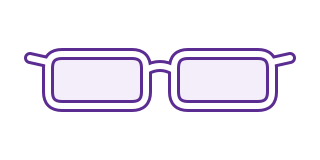
Wider than tall, with straight lines: the familiar everyday office frame. No single designer is credited.
- Advantages: practical; balances a round face; gives a wide side-to-side view for screens and driving.
- Disadvantages: slim versions are too shallow for progressive lenses; it can look plain; a narrow rectangle makes a long face look longer.
- Good for: round and full faces, single-vision wearers, office and computer work.
- Think twice if: you wear, or will soon need, progressive lenses (look for about 30 mm of lens depth or more), or you have a long, narrow face.
Square-top (trapezoid)

Wider at the top than the bottom, usually in thick plastic; the shape was made widely known by the Ray-Ban Wayfarer (1952, Raymond Stegeman). Wayfarer is Ray-Ban's trademark; the general name is trapezoid or square-top.
- Advantages: the strong upper line follows most men's brows; sturdy; the thick rim hides the edge of a minus lens.
- Disadvantages: fairly heavy; a moulded bridge can slide on a low, flat nose; the narrower lower half leaves less room near the nose for a progressive reading zone, so check the depth near the nose before choosing it for progressive lenses.
- Good for: round and oval faces, straight or heavy eyebrows, and minus powers.
- Think twice if: you have highly arched eyebrows, a small, narrow face, or a low nose bridge (low-bridge-fit versions have taller nose rests).
Chunky acetate
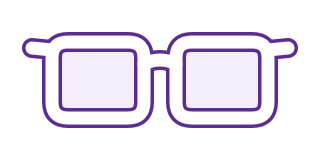
Thick plastic fronts with bevels and bold tortoise, horn or marble patterns. Acetate is a plastic made from cellulose (the fibre in cotton and wood pulp) mixed with a softener. Thick acetate fronts have come and gone since the 1950s; no single designer is credited.
- Advantages: the thick rim hides the edge of a minus lens; strong and long-lasting; can be warmed and reshaped for a better fit; many colours.
- Disadvantages: heavier than metal or TR90; most have a moulded bridge with no nose pads, so they slide on a low, flat nose, more so with sweat.
- Good for: broad faces, high minus powers in a modest lens size, men with a beard or strong features.
- Think twice if: you have a low nose bridge (unless the frame has a low-bridge fit or nose pads), you work long hours in heat, or you have a small, narrow face.
Rimless
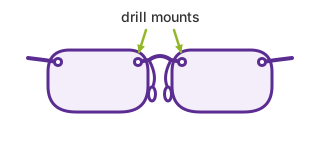
No rim at all: the bridge and arms are screwed into holes drilled through the lenses. Silhouette of Austria and Lindberg of Denmark are two makers known for very light rimless designs in titanium.
- Advantages: the lightest style; almost invisible on the face; nothing blocks the view at the lens edge; suits most face shapes.
- Disadvantages: more fragile; screws loosen and drill holes can crack; needs a tough, drill-friendly lens material, such as Trivex, polycarbonate or a suitable high-index plastic (glass cannot be used); the whole lens edge is on show.
- Good for: low to moderate powers, office and formal settings, men who want their spectacles to disappear.
- Think twice if: you have a high power, do rough or industrial work, play sport in your spectacles, or take them off one-handed.
Frames with a beard
A full beard adds visual weight to the lower face. A frame with a firmer upper line, such as a browline, square-top, navigator or medium-thick acetate, balances it, while very thin rimless frames can seem to vanish. These are styling ideas, not rules: the frame still has to fit and suit your power.
Frames for work
Office and computer work
Men over 40 often manage well with progressive lenses or a second pair of office lenses, and both need a frame deep enough for the lens design. An anti-reflection coating cuts reflections from tube lights and screens.
Port, shipyard, workshop and Navy work
Where metal chips, dust, chemicals or tools can strike the eye, ordinary frames and lenses are not protection. Safety spectacles or goggles made to a recognised safety standard, with side shields and impact-resistant lenses, are needed; prescription versions exist, and some fit over your own spectacles. Follow your employer's or service's eyewear rules. Port, ship and service jobs often ask for an eye fitness certificate.
Outdoor work, riding and driving
- Sun, sea salt and sweat are hard on frames in Goa; titanium, good stainless steel and acetate outlast plated nickel alloys.
- Outdoors, UV400 sunglasses, ideally polarised against glare off water and wet roads, protect the eyes; with a power they can be made as power sunglasses. Polarised lenses can make some dashboard and phone screens look dark.
- At night, wear clear lenses with an anti-reflection coating, never tinted ones. Photochromic lenses darken very little inside a car, because the windscreen blocks most UV.
Sports and safety eyewear
For cricket, football, badminton or cycling, sports frames in tough, flexible materials such as TR90, with polycarbonate lenses and a strap or gripping arms, are safer. A power in a wrapped sports lens needs a special design, and not every prescription can be fitted; your eye doctor or optometrist advises whether sports goggles or contact lenses suit you better.
What your power means for the frame
High minus lenses are thick at the edges, so modest full-rim acetate frames hide them and rimless or very large frames show them. High plus lenses are thick in the centre, and small, well-centred frames keep them lighter. See stylish frames for high power and frame materials.
Dispensing, not just a label
Good vision starts with an eye test, then a frame chosen around your prescription, your measurements and the way you use your eyes at work and at home, then lenses made for that frame and fitted to your face. A well-fitted frame with the right lenses matters far more than the name printed on the arm.
If you need spectacles, the Vision Correction Centre at ReNew Vision Eye Hospital, Vasco, provides vision correction: an eye test, lenses made to your prescription, and help choosing a frame that suits your lenses and your face.
Questions patients ask
What size of frame suits a broad face?
Look at the three numbers inside the arm. A broad face often needs an arm of around 145 to 150 mm and a frame about as wide as the face at the temples. Reach that width with the bridge and end pieces rather than very large lenses, so that your pupils stay near the centre of each lens.
Which frames suit men with a low nose bridge?
Metal frames with adjustable nose pads can be set at the right height on almost any nose. In plastic, look for a low-bridge-fit version with taller nose rests. To check a moulded bridge, smile and look down at your feet: the frame should not slide, and the rims should not rest on your cheeks.
Are fashion frames safe for factory, port or workshop work?
No. Ordinary frames and lenses are not made to stop flying chips or tools. Where the eyes are at risk, wear safety spectacles or goggles made to a recognised safety standard, with side shields. Prescription versions exist, and some fit over your own spectacles.
Do browline frames suit office wear?
For many men, yes. The strong upper bar gives a neat, serious look and the light lower rim keeps the frame open. Check the size, because classic browlines run small, and remember that with a high minus power the thin lower rim shows the lens edge.
Can I wear rimless frames for sport or rough work?
It is wiser not to. Rimless lenses are held by small screws in drilled holes, which can loosen or crack with knocks. For sport or rough work, a full-rim sports frame in a tough material with polycarbonate lenses, or proper safety eyewear, is safer.
Which frames suit men who ride a scooter or bike every day?
A frame with thin, straight arms slides under a helmet more easily and presses less. Medium-sized lenses give a good view without touching the helmet padding. For daytime riding, UV400 power sunglasses help; avoid tinted lenses at night.
Brand and model names on this page are trademarks of their owners and are used only to explain eyewear. ReNew Vision Eye Hospital is not connected with these brands.
This page is general eye-health information, not personal medical advice. Your eye doctor advises you after examining your eyes.