Home › Specialities › Vision correction › Eyewear guide › Eyewear trends 2026
Which eyewear trends are in fashion in 2026?
Trade-magazine reports on the 2026 eyewear fairs described oversized fronts, slim navigators and aviators, soft ovals and cat-eyes, thin coloured metal, chunky acetate, heavy brows, clear and plum frames, light tints and lighter smart glasses. A trend works for you only if it also suits your prescription, your face and your daily routine.
This summary draws on reports from the 2026 eyewear fairs (opti in Munich, MIDO in Milan and SILMO in Paris) in trade magazines such as 20/20, Vision Monday, VisionPlus and Eyecare Business, put in our own words. It adds what an eye hospital cares about: how each trend behaves with your prescription.
A trend is a style, not a medical recommendation. For the basic shapes, see frame shapes explained.
Shapes in the 2026 reports
1. Oversized fronts
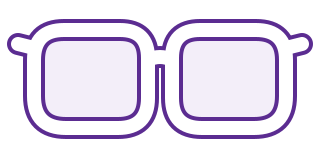
Large lens openings and wide fronts, after years of small, narrow frames. Very large frames were a strong look of the 1970s and 1980s; no single designer is credited.
- Advantages: a confident look, a wide view, and more shade in sunglasses.
- Disadvantages: heavier on the nose, slides down with sweat, and can swamp a small face.
- Good for: broad faces, low or moderate powers, and sunglasses.
- Think twice if: you have a strong power, a small face or a low nose bridge.
- For your lenses: a bigger lens means thicker edges with minus (short-sight) powers and a heavier lens with plus powers; see stylish frames for high power.
2. Aviators and navigators, 1970s style
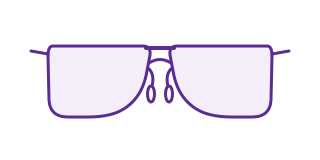
The aviator began as a pilot's sunglass in the 1930s; the navigator keeps its double bridge but squares off the lenses. Vision Monday and VisionPlus reported both in slim metal and thick acetate, often in place of the shallow men's rectangle.
- Advantages: thin-metal versions are light, with adjustable nose pads.
- Disadvantages: a deep teardrop can rest on the cheeks, and a double bridge does not suit every nose.
- Good for: oval, square and heart faces (navigators also round ones), and anyone wanting a light frame.
- Think twice if: you have high cheekbones, a short face, or a high minus power.
- For your lenses: the deep lower area leaves room for a progressive reading zone, but large sizes make strong lenses heavy.
3. Ovals, soft rounds and sculpted cat-eyes
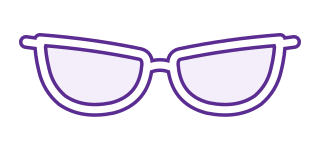
Soft ovals and rounds, slim stretched shapes with rounded corners, and cat-eyes whose outer corners lift upwards. Round frames recall the 1920s and 1930s; the cat-eye is the glamour shape of the 1950s.
- Advantages: curves soften angular features; ovals suit any workplace.
- Disadvantages: small rounds look tiny on a wide face; a strong cat-eye is a lot for daily wear.
- Good for: square and angular faces (rounds and ovals); round and heart faces (cat-eyes).
- Think twice if: you need progressive lenses and the frame is very shallow.
- For your lenses: progressive lenses usually need about 30 mm of frame depth; see frames for progressive lenses.
4. Statement brows
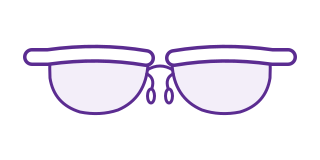
Frames that put the weight along the eyebrows: thick upper bars, browlines (a plastic brow over thin metal rims) and designs with a light or missing lower rim. Shuron's Ronsir frame of 1947 popularised the browline, and Ray-Ban's Clubmaster of 1986 later revived it.
- Advantages: defines the eyebrows, and the open lower half looks light.
- Disadvantages: a heavy brow adds weight to the upper face, and the mixed parts need two kinds of adjustment.
- Good for: oval, round and heart faces, and people with light or thin eyebrows.
- Think twice if: your eyebrows are very thick and the bar would double them.
- For your lenses: a thin or missing lower rim shows the edge of a high minus lens.
Materials, colours and finishes
5. Thin metal in colour and gold
Slim wire frames in colours, gold tones (a few even in solid 14k or 18k gold) and titanium. Wire frames were everyday spectacles long before plastics; no single designer is credited.
- Advantages: light and discreet, with nose pads that can be shaped for a low nose bridge.
- Disadvantages: a thin rim hides nothing, plated colour wears where skin touches it, and lower-grade alloys may contain nickel.
- Good for: older wearers, office wear, and low to moderate powers.
- Think twice if: you react to nickel (pure titanium is the usual alternative) or have a high minus power.
- For your lenses: with a moderate or high power, a thinner high-index lens keeps the edge neat; your eye doctor or optometrist advises after the eye test.
6. Chunky, sculpted acetate
Deep, carved plastic fronts with angled edges, often in tortoise, horn-look or marbled patterns. Thick acetate fronts have come and gone since the 1950s; no single designer is credited.
- Advantages: sturdy, rich in colour, and the thick rim hides the edge of a strong minus lens.
- Disadvantages: heavier, and a moulded bridge may slide on a low, flat nose.
- Good for: high minus powers, broad faces and bold tastes.
- Think twice if: you have a small face or a low nose bridge and the frame has no nose pads.
- For your lenses: one of the few trends that helps strong short-sight prescriptions.
7. Clear and crystal frames
Transparent acetate, often with a faint tint of grey, tea, rose or olive; no single designer is credited.
- Advantages: looks light and goes with most skin tones.
- Disadvantages: shows smudges, can yellow over the years, and the metal core inside the arms shows.
- Good for: people who want a modern but quiet look.
- Think twice if: you have a high minus power, because the thick lens edge and its rings show through a clear rim.
- For your lenses: a tinted crystal or a darker rim hides the edge better than water-clear plastic.
8. Plum, burgundy and teal
20/20 and Eyecare Business described plum, purple, burgundy and teal taking over from plain black as everyday dark colours; no single designer is credited. Our page on frame colour and skin tone explains who suits which colour.
- Advantages: softer than black yet still smart.
- Disadvantages: may clash with some clothes, and dates sooner than black or tortoise.
- Good for: cool and neutral undertones, grey hair, colour without brightness.
- Think twice if: you keep one pair for many years, or your workplace is very formal.
- For your lenses: no effect on the prescription; grey sunglass tints sit well with these colours.
9. Jewellery details
Frames dressed up like jewellery: set crystals or pearls, ornate arms, chains that hang the glasses round the neck, and chrome or mirrored metal. Spectacle chains and decorated frames are old ideas; no single designer is credited.
- Advantages: festive for weddings, and a chain keeps reading glasses at hand.
- Disadvantages: adds weight, catches on hair and dupattas, and metal trims may contain nickel.
- Good for: occasion wear or a second pair.
- Think twice if: it would be your only daily pair, you react to nickel, or it is for a small child (no chains).
- For your lenses: heavy arms can tip the frame forward and shift the viewing zones of progressive lenses.
Sun, sport and technology
10. Shields, masks and sporty wraps
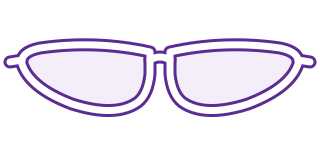
One-piece shield lenses and wraparound frames, a revival of early-2000s styles.
- Advantages: block light, wind and dust from the sides, on a scooter, at cricket or on the beach.
- Disadvantages: a true shield cannot take a normal prescription, and a strong curve can distort vision.
- Good for: plain sunglasses and sport.
- Think twice if: you need your power in your sunglasses.
- For your lenses: a steeply curved frame tilts the lens, which adds unwanted power and prism; prescriptions need a special lens design and some powers cannot be fitted; see power sunglasses for Goa.
11. Tinted lenses worn all day
Soft tints and gradient lenses used indoors as well as outside, and photochromic lenses that darken to a colour. Photochromic glass lenses were developed at Corning Glass Works in the 1960s.
- Advantages: a soft look; some find a light tint comfortable in bright rooms.
- Disadvantages: every tint cuts the light reaching the eye and changes colours, and a tint is not UV protection by itself.
- Good for: daytime and fashion wear.
- Think twice if: you drive or ride at night (tinted lenses are not suitable then), or your sight is already reduced; ask your eye doctor first.
- For your lenses: sunglasses should block UV up to 400 nm (UV400), whatever their colour. Photochromic lenses darken very little inside a car, because the windscreen blocks most UV.
12. Smart glasses
Frames with built-in cameras, speakers, microphones and voice assistants, which 20/20 and Vision Monday reported getting lighter; some models can take prescription lenses. Camera glasses for consumers date from the 2010s; no single designer is credited.
- Advantages: calls, music and voice help without earphones.
- Disadvantages: heavier arms, daily charging, and privacy worries in hospitals and offices.
- Good for: people who would use the features daily.
- Think twice if: you have a strong or progressive prescription; check that your power can be fitted.
- For your lenses: the lens range for smart frames may be narrower than for ordinary frames.
Behind the trends
13. Sustainability and bio-acetate
VisionPlus's MIDO 2026 report described bio-acetate, recycled materials and lighter metals as prominent. Bio-acetate is acetate made with a plant-based softener in place of the usual petroleum-based one. Our guide to frame materials explains it.
- Advantages: more of its raw material comes from plants than in ordinary acetate (the softener as well as the cellulose), with the same look and feel.
- Disadvantages: needs the same care as acetate, and green labels vary.
- Good for: acetate lovers who prefer plant-based raw materials.
- Think twice if: a label promises more than it explains.
- For your lenses: no difference; the frame size still follows your power.
Whichever trend you like, the steps stay the same: an eye test first, then a frame chosen around your prescription, your measurements and how you use your eyes. A frame that fits, with lenses made and checked for you, matters more than the name on the arm.
If you need spectacles, the Vision Correction Centre at ReNew Vision Eye Hospital, Vasco, provides vision correction: an eye test, lenses made to your prescription, and help choosing a frame that suits your lenses and your face.
Questions patients ask
Will a 2026 trend frame look dated in a few years?
Some will. Strong colours, heavy decoration and very large fronts tend to date first, while ovals, rectangles, aviators and tortoise or black acetate return again and again. If you want one pair to last, choose a classic shape and enjoy the trend in colour or in sunglasses.
Are oversized frames suitable if I have a high power?
Often not in the largest sizes. With a strong minus power the edges become thick and heavy, and with a strong plus power the lens becomes heavy in the centre. A moderately sized version of the shape, chosen so that your eyes sit near the centre of each lens, usually works better.
Do tinted fashion lenses protect my eyes from the sun?
Not by themselves. Lens colour and UV protection are separate, so check that sunglasses block UV up to 400 nm (UV400). A light fashion tint is too pale for bright sun at the beach and should not be worn for driving or riding at night.
Can smart glasses be made with my spectacle power?
Some models accept prescription lenses, but the range of powers and lens types can be narrower than for ordinary frames. If you have a strong prescription or wear progressive lenses, confirm that your power can be fitted before you decide on such a frame.
Which 2026 trends suit people over 40 who need progressive lenses?
Shapes with enough depth work well: navigators, aviators, deeper ovals and soft squares, and browlines that are deep enough below the bar. Very slim, narrow ovals and rectangles can cut off the reading zone. The frame height is measured against your lens design during dispensing.
Brand and model names on this page are trademarks of their owners and are used only to explain eyewear. ReNew Vision Eye Hospital is not connected with these brands.
This page is general eye-health information, not personal medical advice. Your eye doctor advises you after examining your eyes.